Thursday, April 30, 2009

The Psychology of Smiling

Exploring Psychology


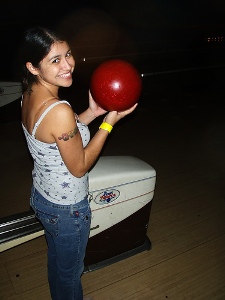
(Photo Credit: Alexander Kurashev)

One of the reasons I love psychology is that by definition it provides a whole host of information that you can relate to. Take something as simple as smiling for instance, we all do it (well most of us do and perhaps we've not been doing it as much lately) but have you ever thought about why you smile? I'm talking about a proper smile, not a false here comes the boss type smile.

Apparently there are two schools of thought concerning the psychology of smiling. These are:

1. Smiling is primarily an individual act. We smile as a result of an inner feeling of happiness.

2. Smiling is primarily a social act. We smile to let those around us know that we are happy.

So what do think?

Ingenious Research

In attempting to answer the why we smile question, Robert Kraut and Robert Johnston from Cornell University decided to go bowling! Kraut and Johnston realized that happiness associated with good bowling, say bowling a strike or a spare provided the pefect opportunity to test the individual Vs Social smiling hypotheses.

The logic behind conducting research in this context is simple but brilliant. At the moment you bowl a strike you are essentially alone, you're not facing anybody, you're looking at the fallen pins, that happiness is all yours. Then shortly after you turn to face your fellow bowlers, family, team mates etc, it's time to share your happiness.

And the winner is?

Social smiling. 4% of bowlers smiled after hitting a strike or spare when facing away from fellow players compared to 42% of bowlers who smiled when they turned round to face other people having hit a strike or spare.

In discussing his research findings Robert Kraut stated:

The smile is a facial response that is recognized around the globe and helps bind people together. We are indeed a "social animal," and the smile is a central way we communicate. I once did a study that blew up in my face because I asked a group of participants not to smile for three days – and they absolutely could not do it.

If you would like to read the smiling bowling alley research in full, you can do so by Clicking Here

When you're Smiling - The Whole World Smiles With You


Click Here to visit the main psychology eBook collection page.


Please share this Psychology Blog Post with others by adding it to your social bookmarks.


www.all-about-psychology.com

A Free & Comprehensive Guide to The World of Psychology


The Psychology of Smiling

Tuesday, April 28, 2009

Hierarchy of Needs: A Theory of Human Motivation by Abraham Maslow (The Psychology eBook Collection)

Exploring Psychology


When Abraham H. Maslow introduced the world to Humanistic Theory, a 'third force' in psychology was born (Behaviorism & Psychoanlytical theory being the first and second force). As the name suggests, humanistic theory concerns itself with characteristics which are distinctly human.

Arguably the best known example of such a characteristic is Self-Actualization, an innate motivating force unique to the human species. It was in this landmark publication that Maslow provided the first published representation of Self-Actualization at the pinnicle of a hierarchy of human needs.

You can download and read this classic psychology publication by Clicking Here

Click Here to visit the main psychology eBook collection page.


Please share this Psychology Blog Post with others by adding it to your social bookmarks.


www.all-about-psychology.com

A Free & Comprehensive Guide to The World of Psychology


Hierarchy of Needs: A Theory of Human Motivation by Abraham Maslow (The Psychology eBook Collection)

Wednesday, April 22, 2009

Basking in Reflected Glory: The BIRG Effect

Exploring Psychology


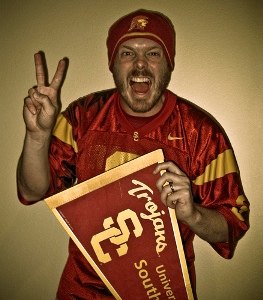
Photo Credit: Jeff the Trojan

Just read a really interesting study that was published in the Journal of Personality and Social Psychology back in 1976. The study by Robert B. Cialdini et al, examined the BIRG effect i.e., the tendency to "bask in reflected glory" (BIRG) by publicly announcing one's associations with successful others. In the field experiments conducted, the research team found that the BIRG effect occurred even though the person striving to bask in the glory of a successful source was not involved in the cause of the source's success.

Experiment 1 demonstrated the BIRG phenomenon by showing a greater tendency for university students to wear school identifying apparel after their school's football team had been victorious than non victorious and experiments 2 and 3 replicated the BIRG effect by showing that students used the pronoun "we" more when describing a victory than a non victory of their school's football team.

The BIRG effect was also observed by Professor Albert Harrison from the University of California when reviewing thousands of biographical entries in Who's Who. According to the biographical analysis many more people were born on Independence day, Christmas day and New Year's day than the days around these high profile dates. This statistical anomoly was apparently the result of some less than honest reporting by the great and good (including religious leaders!) who wanted to be associated with a nationally important day.

Click Here to read the 1976 BIRG effect article published in the Journal of Personality and Social Psychology.

Reflected Glory

Short film about two bands that impersonate the Beatles.


Please share this Psychology Blog Post with others by adding it to your social bookmarks.


www.all-about-psychology.com

A Free & Comprehensive Guide to The World of Psychology


Basking in Reflected Glory: The BIRG Effect

Monday, April 20, 2009

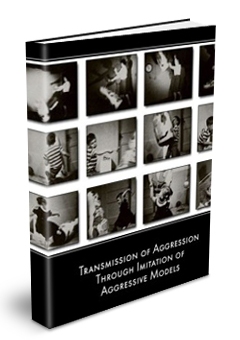
Transmission of Aggression Through Imitation of Aggressive Models By Albert Bandura: The Psychology eBook Collection

Exploring Psychology


Albert Bandura is widely considered the greatest living psychologist. In the early 1960's Albert Bandura began investigating aggression through imitation; research that gave rise to one of the most famous psychology experiments of all time.

You can download and read one of Albert Bandura's original research publications by Clicking Here

Click Here to visit the main psychology eBook collection page.


Please share this Psychology Blog Post with others by adding it to your social bookmarks.


www.all-about-psychology.com

A Free & Comprehensive Guide to The World of Psychology


Transmission of Aggression Through Imitation of Aggressive Models By Albert Bandura: The Psychology eBook Collection

Thursday, April 16, 2009

The Say "Cheese" Guide To Avoiding Divorce

Exploring Psychology


(Photo Credit: Matthew Johnson)

Whether you're looking for your soul mate or you think you've already found them, you might want to take a closer look at their photographs before you do the whole marriage thing; because according to a study that has just been published in the journal of Motivation and Emotion, smile intensity in photographs predicts divorce later in life.

Abstract

Based on social–functional accounts of emotion, we conducted two studies examining whether the degree to which people smiled in photographs predicts the likelihood of divorce. Along with other theorists, we posited that smiling behavior in photographs is potentially indicative of underlying emotional dispositions that have direct and indirect life consequences. In the first study, we examined participants’ positive expressive behavior in college yearbook photos and in Study 2 we examined a variety of participants’ photos from childhood through early adulthood. In both studies, divorce was predicted by the degree to which subjects smiled in their photos.

(Matthew J. Hertenstein et al, DePauw University).

Be Careful Though!

Before you say "I do" to Mr or Ms smiley watch the following video for some alternative Funky Motown psychology - "Don't let the smile fool ya - Take my advice I'm only try' to school ya"


Please share this Psychology Blog Post with others by adding it to your social bookmarks.


www.all-about-psychology.com

A Free & Comprehensive Guide to The World of Psychology


The Say "Cheese" Guide To Avoiding Divorce

Monday, April 13, 2009

Here Comes The Rain Again - Falling On My Head Like A Memory

Exploring Psychology


(Photo Credit: Nick)

If a recently published study proves to be accurate then it follows that people living in Britain must have the best memory recall in the world.

In a simple recall test, researchers from The University of New South Wales found that participants were able to remember three times as many items on cold, windy, days as they were when conditions were bright and sunny. According to lead researcher Joseph Forgas:

We predicted and found that weather-induced negative mood improved memory accuracy...a worse mood helped to focus people's attention on their surroundings and led to a more thorough and careful thinking style, while happiness tended to reduce focus and increase both confidence and forgetfulness.

Click Here for more details on this research paper and to read the study's abstract in full.

As somebody from Northern England who now lives in Southern Spain I would like to add my support to this research as I have completely forgotten why I decided to move to another country!

Wait a Minute! I've just remembered


Incidentally, the music playing in the video above is Here comes the rain again by the Eurythmics, the first two lines of which are:

Here comes the rain again

Falling on my head like a memory


Please share this Psychology Blog Post with others by adding it to your social bookmarks.


www.all-about-psychology.com

A Free & Comprehensive Guide to The World of Psychology


Here Comes The Rain Again - Falling On My Head Like A Memory

Superstition in The Pigeon By B.F. Skinner: The Psychology eBook Collection

Exploring Psychology


Considered a learning theory classic, Superstition in The Pigeon By B.F. Skinner was first published in Journal of Experimental Psychology in 1948.

You can download and read Superstition in The Pigeon by B.F. Skinner for free by Clicking Here

Click Here to visit the main psychology eBook collection page.


Please share this Psychology Blog Post with others by adding it to your social bookmarks.


www.all-about-psychology.com

A Free & Comprehensive Guide to The World of Psychology


Superstition in The Pigeon By B.F. Skinner: The Psychology eBook Collection

Sunday, April 12, 2009

Teaching Pigeons To Bowl. The Story of How B.F. Skinner Discovered Shaping

Exploring Psychology


Look at any list of the most eminent psychologists of the 20th Century and B.F Skinner will be towards the top of that list. Building on the seminal work of both Ivan Pavlov and John Watson, B.F Skinner became the leading exponent of behaviourism within psychology. At the heart of this influential theory is the core belief that human behavior is best understood in terms of responses to environmental stimuli.

In formulating his theories, B.F Skinner conducted numerous behaviour experiements with rats and pigeons, as can be seen in the following video.

We Are What We Do


Shaping

As alluded to in the above video clip a central tenet of Skinner's theory was shaping. This is the notion that reinforcement can be employed to elicit complex behavior and behavior that would not normally be exhibited. For instance in the video a pigeon's behaviour is shaped into ringing a bell by reinforcing with food closer and closer approximations to the desired behavior.

A Day of Great Illumination: B.F. Skinner's Discovery of Shaping

This is the title of a wonderful article written by Gail Peterson that was published in the Journal of The Experimental Analysis of Behavior, which having read it left me thinking "Well I Never!" The following passage article is taken form the introduction.

Despite the seminal studies of response differentiation by the method of successive approximation detailed in chapter 8 of The Behavior of Organisms (1938), B. F. Skinner never actually shaped an operant response by hand until a memorable incident of startling serendipity on the top floor of a flour mill in Minneapolis in 1943. That occasion appears to have been a genuine eureka experience for Skinner, causing him to appreciate as never before the significance of reinforcement mediated by biological connections with the animate social environment, as opposed to purely mechanical connections with the inanimate physical environment. This insight stimulated him to coin a new term (shaping)...Moreover, the insight seems to have emboldened Skinner to explore the greater implications of his behaviorism for human behavior writ large, an enterprise that characterized the bulk of his post-World War II scholarship.

You can read this fascinating article in full by Clicking Here


"Superstition" in The Pigeon by B.F. Skinner (1948)

I will be making this classic piece of research on learning theory available for free download as part of the psychology eBook collection.

The Psychology eBook Collection


Please share this Psychology Blog Post with others by adding it to your social bookmarks.


www.all-about-psychology.com

A Free & Comprehensive Guide to The World of Psychology


Teaching Pigeons To Bowl. The Story of How B.F. Skinner Discovered Shaping

Saturday, April 11, 2009

Occupational Guide To Psychology: The Psychology eBook Collection

Exploring Psychology


The Occupational Guide To Psychology is an invaluable resource produced by the Bureau of Labor Statistics. The guide contains the latest information on a range of psychology topics including:

  • The Nature of Work Within Psychology

  • Training, Qualifications & Advancement

  • Employment Prospects

  • Earnings

  • Related Occupations

  • Sources of Additional Information


  • You can download and read the Occupational Guide To Psychology for free by Clicking Here

    You can access the full eBook collection by clicking on the following link.

    Psychology eBook Collection


    Please share this Psychology Blog Post with others by adding it to your social bookmarks.


    www.all-about-psychology.com

    A Free & Comprehensive Guide to The World of Psychology


    Occupational Guide To Psychology: The Psychology eBook Collection

    Friday, April 10, 2009

    Psychology on the Dance Floor. Investigating Emotional Movement

    Exploring Psychology


    (Photo Credit: BdwayDiva1)

    I was reading about the various events that will be taking place as part of the Edinburgh International Science Festival and one in particular caught my eye. It read:

    A dancer performs in total darkness. Points of light illuminate her movements. Is watching dance enough to make you feel like dancing? Take part in this live experiment investigating emotion perception and dance. No dance skills necessary, dancing shoes optional.

    Given that I am officially one the worst dancers in the world I was intrigued to find out more. It turns out that this event is based on a research project by Professor Richard Wiseman and Dr Peter Lovat from the University of Hertfordshire, who are working alongside dancer Caroline Duker to investigate how dancers portray emotion. As part of the research design, participants watch a dancer perform the same routine either in full light, or in the dark with small points of light attached to the dancer's body. Participants must then attempt to work out the emotion the dancer is portraying.

    In discussing their initial findings Professor Wiseman notes.

    In one part of the experiment, participants saw a dancer portray one of four emotions (neutral, joy, sadness, and anger) whilst performing in full light. The results showed that people were 80% correct. The second part of the experiment involved watching videos of the same dance sequences, but this time everyone just saw six light points that were attached to the dancers shoulders, wrists and ankles.

    The previous work had shown that people were about 63% accurate when shown 13 points of light. Remarkably, participants in our study were 62% accurate with just six points of light. This suggests that people can recognise emotional movement from just the smallest amount of information. We found no difference between men and woman, or different ages.


    Perceptual Importance

    Existing studies into the perception of emotion almost exclusively employ a static methodology i.e. still photographs of facial expressions. These fascinating results suggest that dynamic displays of emotion expressed non facially may be just as important and as such warrant further investigation.


    In the Mood for Dancing will be taking place at the Edinburgh Science Festival on Thursady April 16th.

    Click Here for full details.

    Professor Richard Wiseman

    I recently made Professor Richard Wiseman the inaugural entrant into The Psychology Light Hall of Fame. The Psychology Light Hall of Fame recognises the work of those individuals who make the study and teaching of psychology accessible, fascinating and thoroughly entertaining.

    Click Here to find out more about Professor Wiseman. (scroll down towards bottom of page).

    The Universal Joy of Dance


    I Taught This Guy All His Moves


    Please share this Psychology Blog Post with others by adding it to your social bookmarks.


    www.all-about-psychology.com

    A Free & Comprehensive Guide to The World of Psychology


    Psychology on the Dance Floor. Investigating Emotional Movement

    Thursday, April 9, 2009

    Psychology Pictures

    Exploring Psychology


    I've just added a psychology pictures page to the main website, a photographic tribute to the wonderful world of psychology. The first part of this page contains a handpicked collection of the very best psychology pictures posted on the photo sharing website Flickr. A selection of these photos are featured in the following video clip. Don't forget to vote for your favorite.


    Eventually the psychology pictures page will also contain images that are believed to be in the public domain and as such can be used without restriction. The idea here is to provide a repository of psychology images and psychology graphics that can be used in psychology presentations, projects, lectures, dissertations, books etc.

    You can visit the psychology pictures page by clicking on the following link.

    Psychology Pictures


    Please share this Psychology Blog Post with others by adding it to your social bookmarks.


    www.all-about-psychology.com

    A Free & Comprehensive Guide to The World of Psychology


    Psychology Pictures

    Wednesday, April 8, 2009

    Cognitive Dissonance: The Psychology eBook Collection

    Exploring Psychology


    As promised and following on from yesterday's blog post I've just added Cognitive Consequences of Forced Compliance by Leon Festinger & James M. Carlsmith to the psychology eBook collection.

    Originally published in the Journal of Abnormal & Social Psychology this was the first of numerous studies to corroborate the theory of cognitive dissonance. The premiss for classic piece of research was to test what happens to a person's private opinion if he is forced to do or say something contrary to that opinion?

    You can download and read this psychology classic for free by Clicking Here

    Click Here to visit the main psychology eBook collection page.


    Please share this Psychology Blog Post with others by adding it to your social bookmarks.


    www.all-about-psychology.com

    A Free & Comprehensive Guide to The World of Psychology


    Cognitive Dissonance: The Psychology eBook Collection

    Tuesday, April 7, 2009

    Why We Can't Own Up When We Screw Up: Putting Cognitive Dissonance Theory Into Practice

    Exploring Psychology


    (Photo Credit: Disorderfeed)

    If you study psychology there is a very good chance that you will be introduced to the theory of cognitive dissonance. Originally proposed over fifty years ago by Leon Festinger this classic and remarkably robust theory suggests that a motivational state of inner tension is triggered by logically inconsistent ways of thinking. The mindset of the smoker is often used as a way of explaining cognitive dissonance in the 'real world', e.g, the smoker who thinks:

    "I love a cigarette after a big meal"

    "I know that smoking is really bad for my health"

    According to Carol Tavris & Elliot Aronson dissonance results in mental discomfort, ranging from minor pangs to deep anguish and as such, people are unable to rest easy until they find a way to reduce it. In the case of a smoker, the most obvious way to reduce dissonance would be to stop smoking, but what happens when the smoker tries to quit but can't? In this case the smoker has to reduce dissonance through the careful art of self delusion e.g., "The thing is, I know if I stop smoking I'll gain lots of weight and that wouldn't be healthy would it?"

    Listen & learn

    To learn more about cognitive dissonance and in particular how it reinforces our decisions and beliefs, even the really bad ones, Click Here to listen to an excellent radio inteview with social psychologist Dr. Carol Tavris.

    Related Reading


    From the Inside Flap

    Tavris and Aronson have combined their formidable skills to produce a gleaming model of social insight and scientific engagement. Make no mistake, you need to read this book (Robert B. Cialdini, author of Influence: Science and Practice).

    Why do people dodge responsibility when things fall apart? Why the parade of public figures unable to own up when they screw up? Why the endless marital quarrels over who is right? Why can we see hypocrisy in others but not in ourselves? Are we all liars? Or do we really believe the stories we tell?

    In this terrifically insightful, engaging new book, renowned social psychologists Carol Tavris and Elliot Aronson take a compelling look into how the brain is wired for self-justification. When we make mistakes, we must calm the cognitive dissonance that jars our feelings of self-worth. And so we create fictions that absolve us of responsibility, restoring our belief that we are smart, moral, and right - a belief that often keeps us on a course that is dumb, immoral, and wrong. Backed by years of research, Mistakes Were Made (But Not by Me) offers a fascinating explanation of self-deception - how it works, the harm it can cause, and how we can overcome it. Turn the page, but be advised: You will never be able to shun blame quite so casually again.

    See following link for full details.

    Mistakes Were Made (But Not by Me): Why We Justify Foolish Beliefs, Bad Decisions, and Hurtful Acts


    Cognitive Consequences of Forced Compliance by Leon Festinger & James M. Carlsmith (1959)

    I will be making this classic piece of research on cognitive dissonance available for free download as part of the psychology eBook collection.

    The Psychology eBook Collection


    Please share this Psychology Blog Post with others by adding it to your social bookmarks.


    www.all-about-psychology.com

    A Free & Comprehensive Guide to The World of Psychology


    Why We Can't Own Up When We Screw Up: Putting cognitive Dissonance Theory Into Practice

    Sunday, April 5, 2009

    I'd Kill To Be Famous: Mass Murders & The Media

    Exploring Psychology


    (Photo Credit: Cristian Dagnino)

    This post was prompted by the immigration center shooting and is informed by an episdode of News Wipe that I watched about two weeks ago. For those living outside the UK, News Wipe is produced by the BBC and is described as a thoughtful and scabrous digest of recent news events.

    The episode in question addressed the media coverage of a mass shooting in a German school that left 16 people dead. It included a very informative, and as it transpired, chillingly insightful clip of forensic psychiatrist Dr Park Dietz discussing the fact that he has consistently told CNN and other news networks that if you don't want to propogate more mass murders following the reporting of a mass murder story in the media:

    Do not start the stories with sirens blaring

    Do not have photographs of the killer

    Do not make this 24/7 coverage.

    Do not make the body count the lead story.

    Do not make the killer some kind of anti-hero.

    Do localise this story to the affected community and make it as boring as possible in every other market.

    The reason, according to Dr Dietz is because everytime there is intense saturation coverage of a mass murder, you can expect to see one or two more within a week!

    Excellent advice but is it implementable?

    Even if you could shape and control the nature of mainstream news reports, the fact I'm about to use Twitter to make people immediately aware of this blog post, tells me that reporting of such stories will always have an unregulated and increasingly popular alternative means of dissemination.

    The News Wipe Episode Extract


    Art imitating life? Natural Born Killers


    Please share this Psychology Blog Post with others by adding it to your social bookmarks.


    www.all-about-psychology.com

    A Free & Comprehensive Guide to The World of Psychology


    I'd Kill To Be Famous: Mass Murders & The Media

    Saturday, April 4, 2009

    Genes To Cognition: An Outstanding Neuropsychology Resource

    Exploring Psychology


    This excellent first-of-its-kind website went live on the 16th March to coincide with International Brain Awareness Week. Genes to Cognition (G2C) is aimed at biology and psychology students, as well as families who are facing mental health problems and interested members of the public.

    The website includes fasinating insights from more than 70 neuroscientists from across Europe and the United States, who provide different perspectives on genetic, neural, and cognitive approaches to understanding human behavior.

    G2C Online is distinguished both by its content and the innovative way in which this interactive content is presented. As you explore the site your perspective shifts from one point to another, the effect of which is to emphasize the connections between known elements in brain circuitry, neuroanatomy, and brain function and dysfunction; particularly in the context of specific brain illnesses such as autism, schizophrenia, bipolar illness, and depression.

    Visitors can access an extensive library of unique items including excellent 3-D brain, animations, demonstrations, videos, and experiments.

    Click Here to check out this excellent resource.

    Further related information and resources can be found over at the main website (see following link)

    Biological Psychology.


    Please share this Psychology Blog Post with others by adding it to your social bookmarks.


    www.all-about-psychology.com

    A Free & Comprehensive Guide to The World of Psychology


    Genes To Cognition: An Outstanding Neuropsychology Resource

    Friday, April 3, 2009

    Would You Save A Stranger? Revisiting The Bystander Effect

    Psychology


    Would you save a stranger was the title of a compelling documentary which aired on Channel 4 (UK) last night. The documentary was advertized as follows:

    A 12-year-old girl is beaten and stamped on by a crowd of teenagers on a crowded bus. A man is punched to the ground and kicked repeatedly in the head in an almost deserted London street. Gun-wielding robbers threaten a cashier in a petrol station.

    Witnesses in five separate incidents are forced to decide - intervene and risk their own safety or disengage and turn away. Whether they choose the path of a have-a-go-hero or passive bystander, their decisions will stay with them for the rest of their lives
    .

    In a couple of the featured incidents it seemed almost inconceivable that nobody did anything to intervene, particularly in the case of the violent attack on the young girl on the crowded bus. However, anybody who has studied psychology will recognised what happened as yet another example of the bystander effect.

    The notion of a bystander effect arose from psychological research into the notorious murder of Kitty Genovese in New York in 1964. The attack on Kitty Genovese is believed to have lasted over thirty minutes, the assailant is said to have left the scene twice returning twice to continue the assault. It was reported that 38 people witnessed the attack but did nothing to help. Intrigued by the case, Princeton psychologist John Darley and his colleague Bib Latané set out to discover the factors that might explain this disturbing social apathy. According to Darley:

    The key to unlocking this is the fact that 38 people failed to help us, that's what shocks us and if we picture one person looking, turning away and failing to help, another person looking, turning away, that's awful, that's terrifying, but if we realize that there were complex networks of relationships between the bystanders and the effects that this produces tend to cascade to produce no responding, then we get it and what's so terrifying turns out to be the explanatory cue.

    Darley and Latané proposed that the presence of others can influence an individual's interpretation of events, particularly in "emergency" situations which can be ambiguous e.g. is that person staggering around drunk or ill? When we are in a group we look to the reactions of others for guidance as to whether we should intervene and if nobody has done anything, inaction is perceived as the correct choice. This type of bystander effect is known as Pluralistic Ignorance. Another explanatory factor is known as Diffusion of Responsibility which maintains that while an individual bystander feels that responsibilty to act rests with them, in contrast, multiple bystanders feel much less personal responsibility to act.


    If you live in the UK you can watch the "Would you save a stranger?" documentary online at the Channel 4 website (it will be made available online for the next 29 days).

    Click Here to watch the documentary online.

    Social Psychology

    Research into the bystander effect is firmly routed within social psychology. There is a page dedicated to social psychology on the main page which you can access by Clicking Here.


    Please share this Psychology Blog Post with others by adding it to your social bookmarks.


    www.all-about-psychology.com

    A Free & Comprehensive Guide to The World of Psychology


    Would You Save A Stranger? Revisiting The Bystander Effect

    Wednesday, April 1, 2009

    April Fool! The Psychology of Pranks

    Psychology


    (Photo Credit: Peace Palace Library)

    Happy April Fool's Day everybody. Did anybody manage to fool you today? If so, don't worry as it would appear that being on the receiving end of a prank can actually be good for you psychologically.

    Research has suggested that being duped triggers self awareness in a way that few other experiences are able to, and as such can help us address certain cognitive deficiencies e.g. arrogance and obliviousness.

    The Purpose of Pranks

    Click Here to read a very interesting article published in the New York Times.

    Best April Fool's Day Hoaxes

    The good old BBC has embraced this special day for over 50 years. Here are two of their very best best.

    The Swiss Spaghetti Harvest 1957


    Flying Penguins


    Please share this Psychology Blog Post with others by adding it to your social bookmarks.


    www.all-about-psychology.com

    A Free & Comprehensive Guide to The World of Psychology


    April Fool! The Psychology of Pranks